
Microchip PIC18F26K42-I/ML 8-Bit Microcontroller: Features, Architecture, and Application Design Guide
The Microchip PIC18F26K42-I/ML represents a significant evolution in the PIC18 family, blending the robust legacy of 8-bit architecture with modern peripherals and enhanced core performance. Housed in a compact 5x5 mm 28-pin QFN (ML) package, this microcontroller is engineered for applications demanding high integration, low power consumption, and reliable operation in industrial, automotive, and consumer environments.
Key Features and Enhancements
At the heart of the PIC18F26K42 lies a core capable of operating at up to 64 MHz, delivering a performance of 16 MIPS. A standout feature is its independent of core timing operation, allowing peripherals like timers and communication modules to function even when the CPU is in sleep mode, drastically reducing active power consumption.
The microcontroller boasts a substantial 128 KB of Flash program memory and 8 KB of RAM, providing ample space for complex applications. It also includes 1024 Bytes of Data EEPROM for critical data storage that must be retained without power. Enhanced with Memory Access Partition (MAP), it supports improved data security and firmware upgrade capabilities.
Its peripheral set is rich and versatile:
Advanced Analog: A 12-bit ADC with Computation (ADCC) can perform math operations without CPU intervention, alongside dual 5-bit DACs and two comparators.
Flexible Communication: It includes multiple serial communication interfaces like UART, I2C, and SPI (MSSP), along with CAN Flexible Data Rate (CAN FD) for robust automotive and industrial networking.
Core Independent Peripherals (CIPs): These include Configurable Logic Cells (CLCs), Peripheral Pin Select (PPS), and Hardware Limit Timers, which allow for the creation of custom logic and timing functions, offloading tasks from the CPU and simplifying design.
Architectural Overview
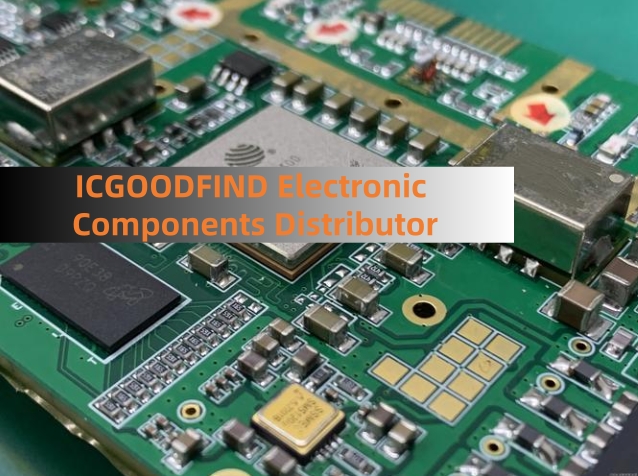
The PIC18F26K42 is built on Microchip’s nanoWatt XLP technology, making it ideal for battery-powered applications. Its architecture is designed for deterministic operation and C-language efficiency. The CPU uses a 16-bit instruction word set with a 31-level deep hardware stack.
A critical architectural improvement is the Programmable Interrupt Controller (PIC), which allows for low-latency interrupt handling. The Direct Memory Access (DMA) controller further enhances data throughput by enabling data transfer between peripherals and memory without burdening the CPU, crucial for high-speed data acquisition and communication tasks.
Application Design Guide
Designing with the PIC18F26K42-I/ML requires consideration of its strengths:
1. Power-Sensitive Designs: Leverage the IDLE and DOZE modes for dynamic power management. Use CIPs to handle real-time tasks while the core remains in sleep, extending battery life.
2. Motor Control and Digital Power: Utilize the Complementary Waveform Generator (CWG), Hardware Limit Timer (HLT), and high-resolution PWM modules to implement efficient motor control and SMPS topologies with minimal software overhead.
3. Sensor Interfaces: The on-chip ADC with computation is perfect for sensor nodes. It can average, filter, and compare samples, waking the CPU only when a specific threshold is met.
4. Robust Communication Gateways: The integration of CAN FD and multiple serial ports makes this MCU an excellent choice for building gateway nodes in networked systems, translating protocols and managing data flow.
5. System Integrity: Employ the Windowed Watchdog Timer (WWDT), Cyclic Redundancy Check (CRC), and Hardware Encryption modules to enhance system reliability and security.
ICGOODFIND: The PIC18F26K42-I/ML is a highly integrated and power-efficient 8-bit microcontroller that successfully bridges the gap between traditional MCU simplicity and modern application demands. Its rich suite of Core Independent Peripherals, advanced analog capabilities, and robust communication interfaces like CAN FD make it an exceptionally versatile choice for designers tackling complex embedded challenges in power-constrained environments.
Keywords: Core Independent Peripherals (CIPs), nanoWatt XLP Technology, CAN FD, Direct Memory Access (DMA), ADC with Computation (ADCC)

